International Law: Water
hard levelWater - International Law / Water crisis
Transcript
Note: This is a transcript of a spoken conversation and is not a word-for-word script.
FinnClimate change and population growth put more pressure on water supplies. We'll show you how the law can help those in need get what they need.
As populations and temperatures rise, how will the law stop a crisis?
And... can the law stop businesses taking the water you need to live?
There are more than 7.8 billion of us on the planet. That number is going up. We're using more and more water, but there's only a limited amount available.
South Africa: water levels in reservoirs started dropping in 2015.
In 2017, people started talking about Day Zero, a possible time when taps would need to be turned off. Real worries that a city of four and a half million people would need to queue in the streets to get water.
Sea in Jordan: 30 years ago, water reached this motorway, but rivers were diverted for farming.
And climate change added to the problem: now the sea itself is at risk and the soil is drying out, so much of the structure of the ground is breaking.
Huge sinkholes have opened up, wrecking roads and homes.
This is the kind of problem that causes other problems. People may fight for water, or run to another country for help. How can the law help? We spoke to Dr Paul Orengoh, from the African Ministers Council on Water. He explained which laws are in place to help share this vital resource.
Now try this...
Practise your skills with more lessons from International Law: Water.
Gratis selamanya · Akses penuh
Go to full course →This lesson includes:
- 📹Video & audio streaming
- 📝Full transcript
- ♾️Full access — free forever
Takeaways
Podcast
International Law: WaterLatest International Law: Water
Water - International Law / The future of water
Episode 211029 / 29 Oct 2021
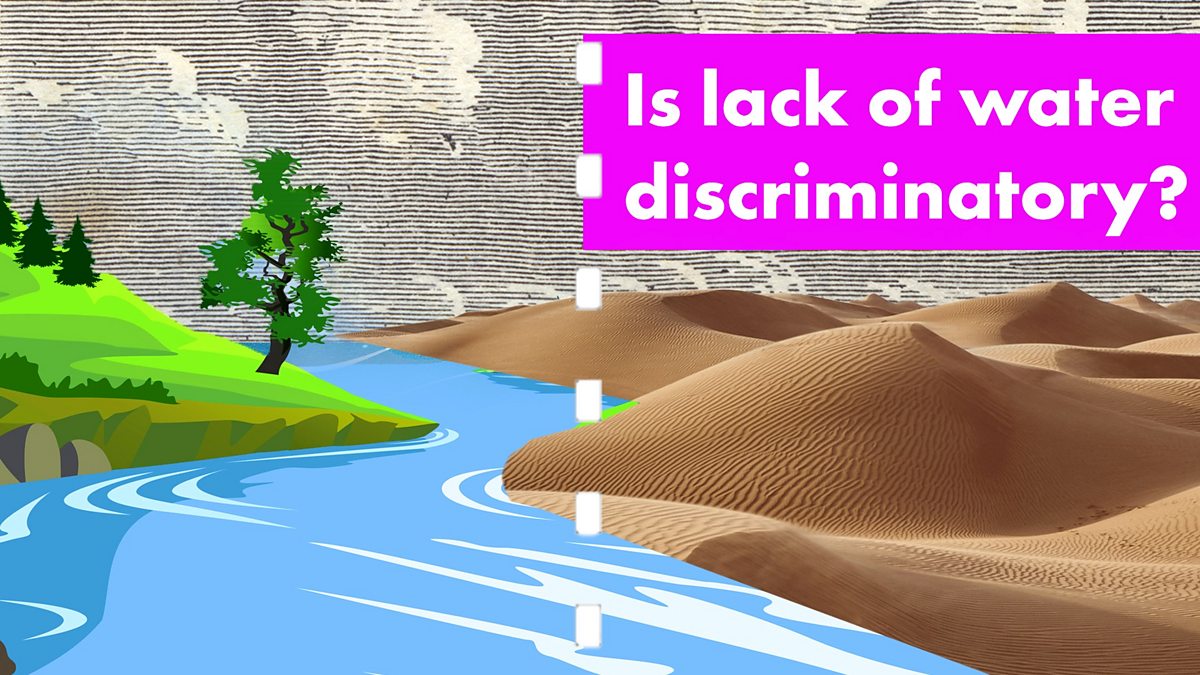
Water - International Law / Is a lack of water discriminatory?
Episode 211027 / 27 Oct 2021
Water - International Law / Do you have a right to water?
Episode 211026 / 26 Oct 2021
Water - International Law / Who owns water?
Episode 211025 / 25 Oct 2021