6 Minute English
medium level6 Minute English / Are saunas good for you?
Transcript
Note: This is a transcript of a spoken conversation and is not a word-for-word script.
Note: This is not a word-for-word transcript.
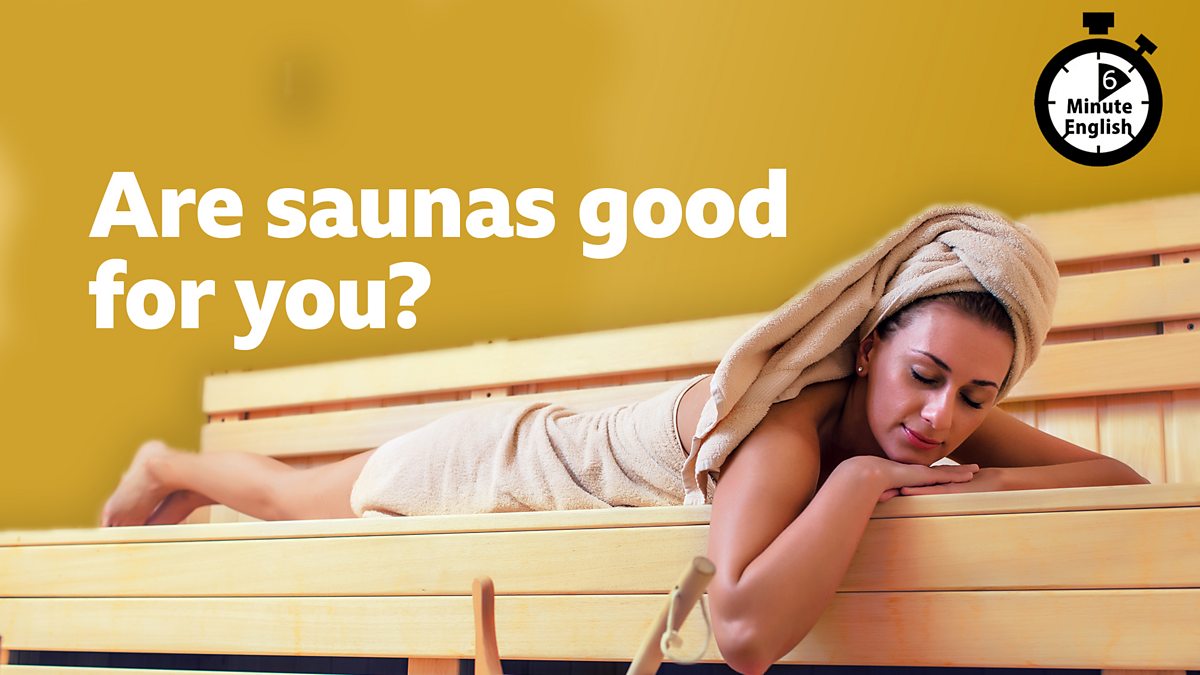
Neil Hello. This is 6 Minute English from BBC Learning English. I'm Neil. GeorgieAnd I'm Georgie. In winter, people find different ways of keeping warm, like wearing extra clothes or staying indoors, but in some countries there's another way of keeping the cold out going for a sauna. NeilYes, Nordic countries like Sweden and Finland have a long history of taking saunas, but now they're popping up in Britain too. Have you ever been for a sauna, Georgie? GeorgieI have, yes. And if I'm honest, I'm not a huge fan. I don't really like being too hot. It's uncomfortable. What about you, Neil? NeilOh really? I quite like a sauna. You feel really refreshed afterwards. GeorgieSo, what is a sauna? Well, a typical sauna is a small wooden room heated with steam to around 80 C. It's hot enough to make anyone sweat, but are saunas good for your health as well? That's what James Gallagher wanted to find out for BBC Radio 4 programme Inside Health. James GallagherWe're seeing what saunas do to the human body. They're popping up all over the country with claims that high temperatures boost your health and well-being, but are they all they're cracked up to be? NeilJames wants to find out if saunas are all they're cracked up to be. He means, "Are they as good as people say?" And that's exactly what we'll be finding out in this episode, along with some useful new words and phrases. GeorgieAnd remember, you can practise all the new vocabulary from this episode with the quiz and worksheet on our website, bbclearningenglish.com.
But now I have a question for you, Georgie. The word sauna comes from the Finnish language, but what does it mean? Does it mean: a) sweat,b) hot water, orc) bathhouse? GeorgieOoh, I'm going to guess c) bathhouse. NeilOK. Well, we'll find out if you're right at the end of the programme. In recent winters, saunas have grown in popularity in the UK. BBC reporter James Gallagher met some people going to M r A Sawna, a beach sauna in South Wales. He asked them why they love saunas so much. James GallagherHello everyone! EveryoneHello! James GallagherWho loves a sauna? EveryoneMe! James GallagherTell me why. Speaker 1Ah, it's just so relaxing. It just makes you feel at ease. Speaker 2It's also great for relaxing muscles if you're tense or anything like that at all. Speaker 3Yeah, I always love coming down here when I'm a bit stressed out, and by the time that I'm finished, I feel like I've completely reset. It's wonderful. GeorgieThe first speaker says saunas make her feel at ease a phrase meaning comfortable and relaxed. And the next speaker thinks saunas are great if you feel tense an adjective meaning worried and unable to relax. NeilSaunas make the final speaker feel like she's reset. You might already know the word reset to mean turning a computer off and on again when it's not working, but used in connection with a person, reset means to start again after a rest, so that you feel better about life. GeorgieSo, it seems saunas do help people feel better, but is there actual medical evidence that it's good for us? Here's James Gallagher again, speaking with Professor Damian Bailey, an expert in human physiology for BBC Radio 4 programme Inside Health. James GallagherWhen we start to connect this to the arguments around health benefits, is there a health benefit to going in the sauna? Damian BaileyYeah. I mean, I looked at the research really closely. I was fascinated by the evidence huge benefits. I mean really huge benefits. And it's cultural, of course. Five million people in Finland 90% of them use saunas. Maybe we should be copying what the Finns do, because there's a 40% reduction in all-cause mortality with the sauna-goers. Now, this is what we would call observational data, but it's based on thousands and thousands of sauna-goers. These are observational data sets, so we really do need what we call RCTs randomised controlled trials so everything, just as you've mentioned there, everything is absolutely controlled. But we can't turn our noses up at the current data the observational data.NeilDamian discusses the evidence from Finland, a country where 90% of the population are regular sauna-goers, and it's impressive a 40% reduction in deaths from all causes. But it's important to remember that this is based on observational data information collected from watching people's natural behaviour and not from controlled medical trials. GeorgieNevertheless, this observational data is based on evidence from thousands and thousands of Finns over many years. That's why Damian thinks we shouldn't turn our noses up at it. We shouldn't reject it simply because we think it's not good enough for us. Well, all this talk about saunas has made me want to give it another try, but not before you reveal the answer to your question, Neil. NeilI asked you what the Finnish word sauna means. Is it: a) sweat, b) hot water, or c) bathhouse? GeorgieAnd I said bathhouse. Am I right? NeilYou are absolutely correct. Well done! GeorgieYay! NeilOK. Let's recap the vocabulary we've learned in this episode. If something is not all it's cracked up to be, it isn't as good as people say. GeorgieWhen someone's at ease, they feel comfortable and unstressed, whereas a tense person is worried and unable to relax. NeilWhen someone resets, they start again after a rest which has made them feel better about life.GeorgieObservational data is information collected from watching people's natural behaviour without interfering in it. NeilAnd finally, if you turn your nose up at something, you reject it because you think it's not good enough for you. Once again, our six minutes are up. But if you want to improve your English with more trending topics and useful vocabulary, you'll find plenty on our website, bbclearningenglish.com. See you again soon. But for now, it's goodbye. GeorgieGoodbye!
Find an A-Z list of our programmes.
To learn English from news headlines, listen to Learning English from the News.
Practise your reading skills with The Reading Room.
How do you feel about being rejected?
What's better for learning languages – an app or a class?
Every year we see damage, death and destruction caused by hurricanes, cyclones and typhoons - tropical storms. Is climate change making this impact worse?
What is your favourite smell?
Now try this...
Practise your skills with more lessons from 6 Minute English.
Gratis selamanya · Akses penuh
Go to full course →This lesson includes:
- 🎧Audio lesson
- 📄Downloadable PDF
- 📝Full transcript
- ♾️Full access — free forever
Takeaways
Podcast
6 Minute EnglishLatest 6 Minute English
6 Minute English / Scared of speaking English?
Episode 260122 / 22 Jan 2026
Beth and Pippa talk about why we often find speaking a new language scary.

6 Minute English / Can AI solve crime?
Episode 250417 / 17 Apr 2025
Could artificial intelligence be used to solve a murder?

6 Minute English / Learning multiple languages
Episode 250410 / 10 Apr 2025
Is learning languages good for you?
6 Minute English / Are we getting more allergic to things?
Episode 250403 / 03 Apr 2025
Do you know anyone who has 50+ allergies?
6 Minute English / The country that measures happiness
Episode 250306 / 06 Mar 2025
Is happiness the key to success?
6 Minute English / Becoming a musician
Episode 250130 / 30 Jan 2025
Hear about life as a professional musician

6 Minute English / Is rejection good for us?
Episode 260917 / 17 Sep 2026
How do you feel about being rejected?

6 Minute English / Can apps teach you a language?
Episode 260910 / 10 Sep 2026
What's better for learning languages – an app or a class?

6 Minute English / Climate change and extreme weather
Episode 260903 / 03 Sep 2026
Every year we see damage, death and destruction caused by hurricanes, cyclones and typhoons - tropical storms. Is climate change making this impact worse?

6 Minute English / How do we describe smells?
Episode 260827 / 27 Aug 2026
What is your favourite smell?