6 Minute English
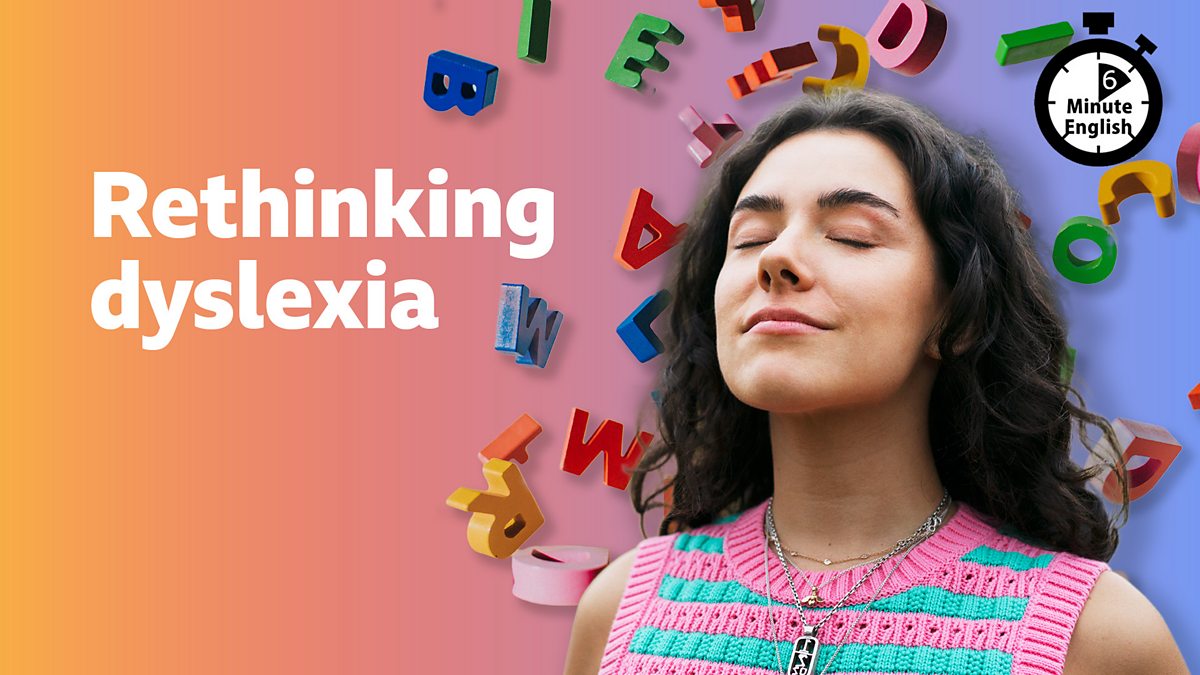
medium level6 Minute English / Rethinking dyslexia
Transcript
Note: This is a transcript of a spoken conversation and is not a word-for-word script.
Note: This is not a word-for-word transcript.
Hello, this is 6 Minute English from BBC Learning English. I'm Phil. PippaAnd I'm Pippa. Are you a big reader, Phil? PhilSometimes yes, sometimes no. Sometimes I go a while without reading anything. What about you? PippaWell, I really love to read. I read on the train to work all the time. PhilAh, well, that is a great way to get some reading in, I guess. PippaYes and reading, of course, is a life skill an essential skill which is useful or important in everyone's life. But reading can be a struggle for people with dyslexia a learning difficulty making it hard for people to read, write or spell. PhilIt's thought that around one in ten people in the UK are dyslexic, and many dyslexic children struggle at school, where the focus is on reading and writing. But in this episode, we'll be hearing how dyslexics have other skills which allow them to excel in the workplace. As usual, we'll be learning some useful new words and phrases, and remember, you'll find all the vocabulary for this episode on our website, bbclearningenglish.com. PippaBut first, I have a question for you, Phil. Studies have shown that people with dyslexia have enhanced abilities in certain areas and can excel in creative thinking, problem solving and inventiveness. So, which famous scientist was dyslexic? Was it: a) Stephen Hawking,b) Albert Einstein, orc) Marie Curie? PhilOh, I think... I think it's b) I think it's Albert Einstein. PippaWell, we'll find out the answer at the end of the programme. Now, the British charity Made By Dyslexia shares online learning tools and works with schools and teachers to raise awareness about the condition. The charity recently collaborated with British celebrities who have dyslexia for this promotional video: Orlando BloomIf you're dyslexic, it's kind of your superpower. It's, like, the way that you think. Richard BransonOur brains they're wired to, I think, process information differently. Keira KnightleyThe way I see the world might be different from somebody else, but that's valid. In fact, it's vital. PhilYou might recognise some of those voices, including actors Orlando Bloom and Keira Knightley and businessman Richard Branson. The message is that, far from being a disability, dyslexia is their superpower the ability to do something other people can't. PippaMade By Dyslexia was founded by social entrepreneur Kate Griggs, and Kate co-authored a report showing that empowering dyslexic workers could boost the global economy by billions. BBC World Service programme People Fixing the World met Kate at the report's London launch event, where she explained why being dyslexic can actually give advantages in life, including some exciting job prospects. Kate GriggsIf you think about what you have to do as a spy, you have to be reading people really quickly, spotting complex patterns and solving problems really quickly, so you can see whether there's a terror threat. It's natural that dyslexics are brilliant spies. PhilKate thinks dyslexics make good spies people who secretly collect information about another country's government or organisations. Why? Because they're good at reading people. To read people means to be able to understand someone's true intentions through their body language and behaviour, rather than their words. PippaAlso present at the London charity event was space scientist and dyslexic herself, Dr Maggie Aderin-Pocock. Here, Maggie tells BBC World Service's People Fixing the World how being dyslexic contributes different skills and ideas to her project teams: Dr Maggie Aderin-PocockWell, I think it's recognising people's skills and differences. It's about teamwork and collaboration. We do it in science and that's when we reach for the stars, but to do that, we need to know our skills and value all the skills. PhilMaggie thinks that everyone's skills should be valued or considered important. Dyslexics may struggle to read or spell, but their skills in problem-solving and communication, for example, can be essential for scientific success. PippaBy valuing everyone's contribution, business and science teams can reach for the stars an idiom meaning to be ambitious and try to achieve something difficult, even if it seems impossible. PhilAnd talking of reaching for the stars, Pippa, I think it's time you revealed the answer to your question about successful scientists. PippaYes, I asked you which famous scientist was dyslexic. Was it a) Stephen Hawking, b) Albert Einstein, or c) Marie Curie? And you were right, Phil. It was Albert Einstein. OK. Let's recap the vocabulary we've learned, starting with life skill an essential skill, such as reading or problem-solving, which is useful in everyone's life. PhilA superpower is the ability to do something that other people can't. PippaA spy is someone who secretly collects information about other countries' governments or organisations. PhilIf you're good at reading people, you can understand people's real intentions through how they act and behave, instead of what they say. PippaIf you value something or someone, you consider them to be important. PhilAnd finally, the idiom to reach for the stars means to have high or ambitious aims and try to achieve something difficult, even if it seems impossible. PippaOnce again, our six minutes are up, but remember, you can find many more trending topics, plus a quiz and worksheet for this episode, on our website, bbclearningenglish.com. Hope to see you there soon, but for now, it's goodbye! PhilGoodbye!
Have you tried this series?
Learn about the fears that come with speaking a foreign language and get tips about how to overcome them.
How do you feel about being rejected?
What's better for learning languages – an app or a class?
Every year we see damage, death and destruction caused by hurricanes, cyclones and typhoons - tropical storms. Is climate change making this impact worse?
What is your favourite smell?
Would you trust a robot to drive you around a city?
When you were growing up, did your mum or dad do more household chores?
Now try this...
Practise your skills with more lessons from 6 Minute English.
Gratis selamanya · Akses penuh
Go to full course →This lesson includes:
- 🎧Audio lesson
- 📄Downloadable PDF
- 📝Full transcript
- ♾️Full access — free forever
Takeaways
Podcast
6 Minute EnglishLatest 6 Minute English
6 Minute English / Scared of speaking English?
Episode 260122 / 22 Jan 2026
Beth and Pippa talk about why we often find speaking a new language scary.
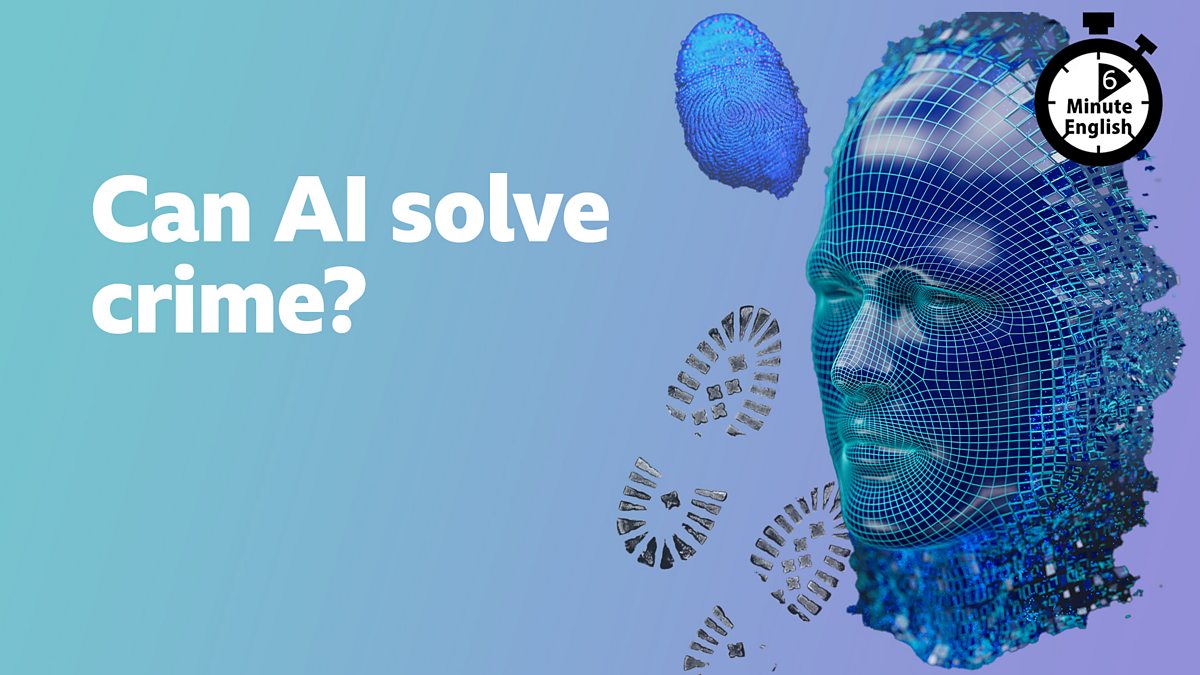
6 Minute English / Can AI solve crime?
Episode 250417 / 17 Apr 2025
Could artificial intelligence be used to solve a murder?
6 Minute English / Learning multiple languages
Episode 250410 / 10 Apr 2025
Is learning languages good for you?
6 Minute English / Are we getting more allergic to things?
Episode 250403 / 03 Apr 2025
Do you know anyone who has 50+ allergies?
6 Minute English / The country that measures happiness
Episode 250306 / 06 Mar 2025
Is happiness the key to success?
6 Minute English / Becoming a musician
Episode 250130 / 30 Jan 2025
Hear about life as a professional musician

6 Minute English / Is rejection good for us?
Episode 260917 / 17 Sep 2026
How do you feel about being rejected?

6 Minute English / Can apps teach you a language?
Episode 260910 / 10 Sep 2026
What's better for learning languages – an app or a class?

6 Minute English / Climate change and extreme weather
Episode 260903 / 03 Sep 2026
Every year we see damage, death and destruction caused by hurricanes, cyclones and typhoons - tropical storms. Is climate change making this impact worse?

6 Minute English / How do we describe smells?
Episode 260827 / 27 Aug 2026
What is your favourite smell?