6 Minute English
medium level6 Minute English / Are we too fixated on protein?
Transcript
Note: This is a transcript of a spoken conversation and is not a word-for-word script.
Note: This is not a word-for-word transcript.
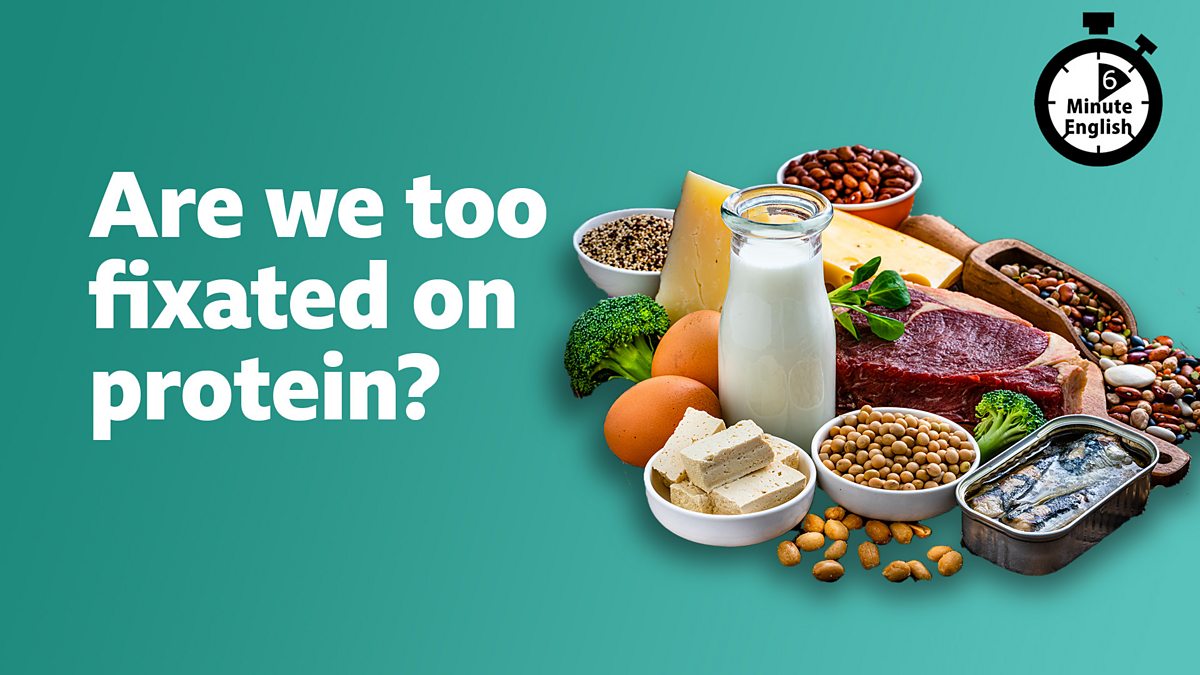
Hello, this is 6 Minute English from BBC Learning English. I'm Neil. GeorgieAnd I'm Georgie. Neil, we're talking about protein today. What type of protein do you usually eat? NeilWell, I like all kinds of proteins fish, bit of chicken but I think I really like an egg. An egg is my favourite kind of protein. GeorgieAh, I was going to say that too. I'm a big fan of breakfast foods and eggs are my favourite. NeilWell, you can't beat a good breakfast! Of all the main food groups, such as carbohydrate, fat and fibre, it's protein that seems to be most in the news. In shops and on social media, you'll find all kinds of high-protein foods being advertised, from shakes and yoghurts to chocolate. Here's Ruth Alexander, presenter of BBC World Service programme The Food Chain: Ruth AlexanderCast your eye over most aisles in the supermarkets now and you'll see high protein products in abundance: pasta made with lentils and chickpeas rather than wheat flour, bread fortified with beans and pulses. GeorgieRuth casts her eye over the supermarket shelves. If you cast your eye over something, you take a quick look at it. NeilWhat she sees are protein products in abundance in other words, in large quantities. Products which already contain protein, like yoghurt, are re-packaged as 'high-protein', while other items have extra protein added, often in the form of beans and pulses. Protein is big business! GeorgieOur bodies need protein for health and to build muscle, but with all this focus on protein, are we forgetting about other important nutrients, such as fibre? That's what we'll be discussing in this programme, hearing some useful new words and phrases. NeilBut first I have a question for you, Georgie. The popularity of protein started with bodybuilders and people working out in gyms, who ate extra protein to gain muscle. Irishman Patrick Callahan is a big name in the protein-muscle world, but do you know who he is? Is he: a) the owner of a company which makes protein shakes,b) the winner of the 2024 Mister Universe bodybuilding contest, orc) the scientist who discovered a new protein in outer space? GeorgieOoh, I'm going to say Patrick Callahan is the winner of the 2024 Mister Universe bodybuilding contest. NeilOK. We'll find out if you're right at the end. Marketing campaigns that promote sales of high-protein food are certainly working. Sales of protein products make around 7 billion globally. Here's Scott Dicker from SPINS, a market research company in Chicago, talking with BBC programme The Food Chain: Scott DickerSo, sometimes carbs are good; sometimes they're bad for consumers. Sometimes fat is good; sometimes it's bad for consumers. But protein seems to have this continuous health halo on it. GeorgieUnlike carbs that's carbohydrates and fat, consumers don't see any downside to eating protein. Scott says protein has a health halo, a marketing term which describes perceiving a food to be healthy based on a single feature, such as being 'organic', 'gluten-free' or in this case 'high-protein', even if its overall nutritional value is poor. NeilYes, food which used to be considered unhealthy is now called healthy just because a spoonful of protein powder has been added. So, could our modern obsession with protein mean that we ignore other important food groups, like fibre? NHS surgeon and blogger Dr Karan Rajan thinks so and explains why here to Ruth Alexander, on BBC World Service programme The Food Chain: Ruth AlexanderAnd do you think we're paying enough attention to fibre? Dr Karan RajanHistorically, probably not. I think the tide is turning, and there's more people interested in fibre and optimising their fibre intake and fibermaxxing even it's a trend on TikTok. Ruth AlexanderWhat is fibermaxxing? Dr Karan RajanFibermaxxing is, you know, as it suggests, similar to the protein-maxing trend, where people are trying to maximise their fibre intake with little hacks or tricks or tips they could do, whether it's, you know, adding certain seeds or nuts to snacks. GeorgieMany people pay more attention to protein than fibre in their diet, but Dr Karan thinks the tide is turning an idiom which means that things are changing. In part, this is thanks to a new trend from America called fibermaxxing consuming lots of fibre by eating fibre-rich foods and supplements for their health benefits. NeilDr Karan also gives some hacks good solutions or pieces of advice to help boost your fibre intake. For example, adding seeds and nuts to meals. GeorgieIn fact, the healthiest diet is probably a balanced diet: one containing items from all the major food groups. But I'm still intrigued by your question, Neil. Isn't it time you revealed the answer? NeilI asked you who the Irishman Patrick Callahan was. GeorgieAnd I said he was the winner of the Mister Universe contest. NeilAnd you were correct. GeorgieYay! NeilOK. Let's recap the vocabulary we've learned in this episode. If you cast your eye over something, you have a quick look at it. GeorgieIf something is in abundance, there's a lot or more than enough of it. NeilA health halo refers to overestimating how healthy an item is based on a single feature, such as being low in calories, gluten-free or high in protein. GeorgieThe idiom the tide is turning means that things are changing. NeilThe trend fibermaxxing means people intentionally consume lots of fibre by eating fibre-rich foods and supplements for their health benefits. GeorgieAnd finally, a hack is a good solution or piece of advice. Once again, our six minutes are up but here's another hack for you remember you can find worksheets, quizzes and loads more resources to improve your English over on our website, bbclearningenglish.com. See you there soon, but for now it's goodbye! NeilGoodbye!
Learn more about food in English with our food topic page.
Learn more idioms and phrases in The English We Speak and English in a Minute.
Try The Reading Room to improve your reading skills.
Beth and Neil talk about a strange emotion we can feel at Christmas called nostalgia
Would you know how to spot a Death Cap mushroom?
Could your next therapist be a horse?
Have you ever tried a crisp sandwich?
Do you follow politics on social media?
Now try this...
Practise your skills with more lessons from 6 Minute English.
Gratis selamanya · Akses penuh
Go to full course →This lesson includes:
- 🎧Audio lesson
- 📄Downloadable PDF
- 📝Full transcript
- ♾️Full access — free forever
Takeaways
Podcast
6 Minute EnglishLatest 6 Minute English
6 Minute English / Scared of speaking English?
Episode 260122 / 22 Jan 2026
Beth and Pippa talk about why we often find speaking a new language scary.

6 Minute English / Can AI solve crime?
Episode 250417 / 17 Apr 2025
Could artificial intelligence be used to solve a murder?
6 Minute English / Learning multiple languages
Episode 250410 / 10 Apr 2025
Is learning languages good for you?
6 Minute English / Are we getting more allergic to things?
Episode 250403 / 03 Apr 2025
Do you know anyone who has 50+ allergies?
6 Minute English / The country that measures happiness
Episode 250306 / 06 Mar 2025
Is happiness the key to success?

6 Minute English / Becoming a musician
Episode 250130 / 30 Jan 2025
Hear about life as a professional musician

6 Minute English / Is rejection good for us?
Episode 260917 / 17 Sep 2026
How do you feel about being rejected?

6 Minute English / Can apps teach you a language?
Episode 260910 / 10 Sep 2026
What's better for learning languages – an app or a class?

6 Minute English / Climate change and extreme weather
Episode 260903 / 03 Sep 2026
Every year we see damage, death and destruction caused by hurricanes, cyclones and typhoons - tropical storms. Is climate change making this impact worse?

6 Minute English / How do we describe smells?
Episode 260827 / 27 Aug 2026
What is your favourite smell?